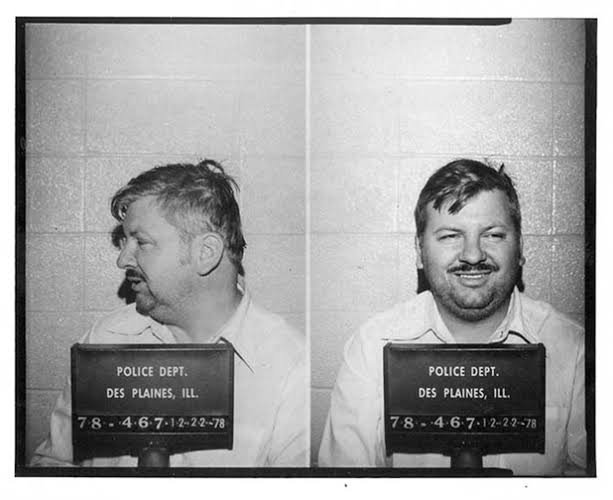
John Wayne Gacy’s final moments remain one of the most discussed parts of his criminal history. The phrase commonly associated with his execution is “Kiss my ass.” However, accounts from people connected to the execution have disputed whether those were actually his final spoken words. Gacy was executed by lethal injection in Illinois shortly after midnight on May 10, 1994, after being convicted of murdering 33 young men and boys.
Who Was John Wayne Gacy?
John Wayne Gacy was an American serial killer who became one of the most notorious criminals in U.S. history. He was arrested in 1978 after an investigation into the disappearance of teenager Robert Piest led police to his home.
Investigators eventually discovered human remains connected to Gacy’s property. He was later convicted of 33 murders, most involving young men and teenage boys. His case attracted enormous public attention because of his involvement in community activities and his performances as a clown at charitable events.
The contrast between his public image and his crimes became a major part of the story surrounding his case.
When Was John Wayne Gacy Executed?
Gacy was executed at Stateville Correctional Center in Illinois shortly after midnight on May 10, 1994. He had spent more than a decade on death row while his conviction and sentence went through the appeals process.
His execution was carried out by lethal injection. It became a highly publicized event, with large groups gathering outside the prison.
The execution itself did not proceed completely smoothly. Reports describe a problem with the intravenous line that temporarily interrupted the process before it could continue.
What Were John Wayne Gacy’s Last Words?
The answer depends on which account is being considered.
The phrase most commonly attributed to Gacy is “Kiss my ass.” Several published accounts have described this as his final statement as he was taken toward the execution chamber. CBS Chicago has also reported the phrase while noting that accounts of his final words vary.
However, there is an important complication.
William Kunkle, the prosecutor who helped secure Gacy’s conviction and was present at the execution, later said that Gacy did not say “Kiss my ass” as an official final statement. According to Kunkle, Gacy instead made comments to the effect that killing him would not bring his victims back and that the state was committing murder by executing him.
Why Is There Confusion?
The disagreement appears to come from the difference between what Gacy may have said to prison personnel earlier and what he said immediately before the execution began.
One account places “Kiss my ass” in a conversation with a prison official rather than as a formal statement delivered inside the execution chamber. Kunkle said the phrase had been attributed to Gacy but did not occur as part of his official final statement.
This distinction is important because the popular version of the story has been repeated for decades.
The Two Main Accounts Compared
| Account | Reported final words or statement | Context |
|---|---|---|
| Widely reported version | “Kiss my ass” | Often described as words spoken to a prison guard |
| William Kunkle’s account | A statement that killing him would not bring victims back and that the state was committing murder | Described as the statement connected to the execution |
| CBS Chicago account | “Kiss my ass” is commonly reported | Notes that accounts vary |
| A&E account | No confirmed “Kiss my ass” statement | Reports conflicting contemporary accounts |
The table shows why it is safer to describe “Kiss my ass” as the commonly reported phrase rather than an unquestionably verified official final statement.
What Did Gacy Say to His Lawyer?
Gacy also made statements to his lawyer before the execution that provide additional context.
According to accounts of his final conversations, he argued that executing him would not bring his victims back. He also characterized the state’s action against him as murder.
These statements were different from the short phrase popularly associated with his execution. They reflected Gacy’s continued attempt to frame the death penalty as another killing rather than accepting responsibility in the way many people expected.
His position was consistent with his broader history of making claims and arguments about his case.
Did John Wayne Gacy Show Remorse?
Reports about Gacy’s attitude during his final years generally describe him as continuing to dispute or minimize aspects of his responsibility.
During interviews, he offered various explanations for evidence against him and maintained claims that others might have been involved. CBS Chicago’s archival reporting documents several of these explanations, including his statements about other suspects and his attempts to explain evidence found during the investigation.
His attitude toward execution was also unusual. In an earlier interview, Gacy said that thinking about death for many years had not made him particularly afraid of it.
Why Are His Last Words Still Discussed?
The fascination with John Wayne Gacy last words comes partly from the contrast between the seriousness of the crimes and the short, defiant phrase traditionally attributed to him.
Final statements made before executions often become part of the historical record because they are viewed as a person’s final opportunity to communicate publicly. In Gacy’s case, however, the uncertainty surrounding the exact wording has become part of the story itself.
The phrase “Kiss my ass” has been repeated in books, documentaries, news reports, and discussions about famous criminal cases. Yet the later comments from people who witnessed or were directly involved in the execution make the history more complicated than the popular version suggests.
What Happened After His Final Moments?
Gacy was pronounced dead at 12:58 a.m. on May 10, 1994. His execution marked the end of a case that had remained in the public eye for more than a decade.
His death did not end interest in the case. Investigators continued working to identify victims, while journalists and researchers examined unanswered questions surrounding his crimes.
His execution also became part of discussions about capital punishment in Illinois, particularly because it was one of the state’s highly publicized executions after a long period without carrying out a death sentence.
The Real Story Behind “Kiss My Ass”
The simplest answer to the question “What were John Wayne Gacy’s last words?” is that “Kiss my ass” is the phrase most commonly attributed to him.
But the more accurate historical answer requires a qualification: the phrase’s status as his official final statement has been disputed.
Prosecutor William Kunkle specifically rejected the popular account and said that Gacy’s actual statement concerned the victims and the state’s decision to execute him.
That disagreement means the phrase should not be presented as an unquestionable fact without context.
Frequently Asked Questions
1. What were John Wayne Gacy’s last words?
The phrase most commonly reported is “Kiss my ass.” However, prosecutor William Kunkle later disputed that this was Gacy’s official final statement.
2. When was John Wayne Gacy executed?
John Wayne Gacy was executed by lethal injection shortly after midnight on May 10, 1994, in Illinois.
3. Was “Kiss my ass” definitely his final statement?
Not definitively. Multiple reports have repeated the phrase, but Kunkle said Gacy did not use it as his formal final statement before the execution.
4. How many murders was Gacy convicted of?
Gacy was convicted of 33 murders involving young men and boys.
5. How did John Wayne Gacy die?
Gacy died by lethal injection at Stateville Correctional Center in Illinois on May 10, 1994.
Conclusion
The story of John Wayne Gacy last words is more complicated than the famous phrase “Kiss my ass” suggests. That statement has been widely reported for decades, but people directly connected with the execution have challenged whether it was actually his final official statement. Gacy was ultimately executed by lethal injection in Illinois in 1994, bringing an end to one of the country’s most notorious criminal cases.