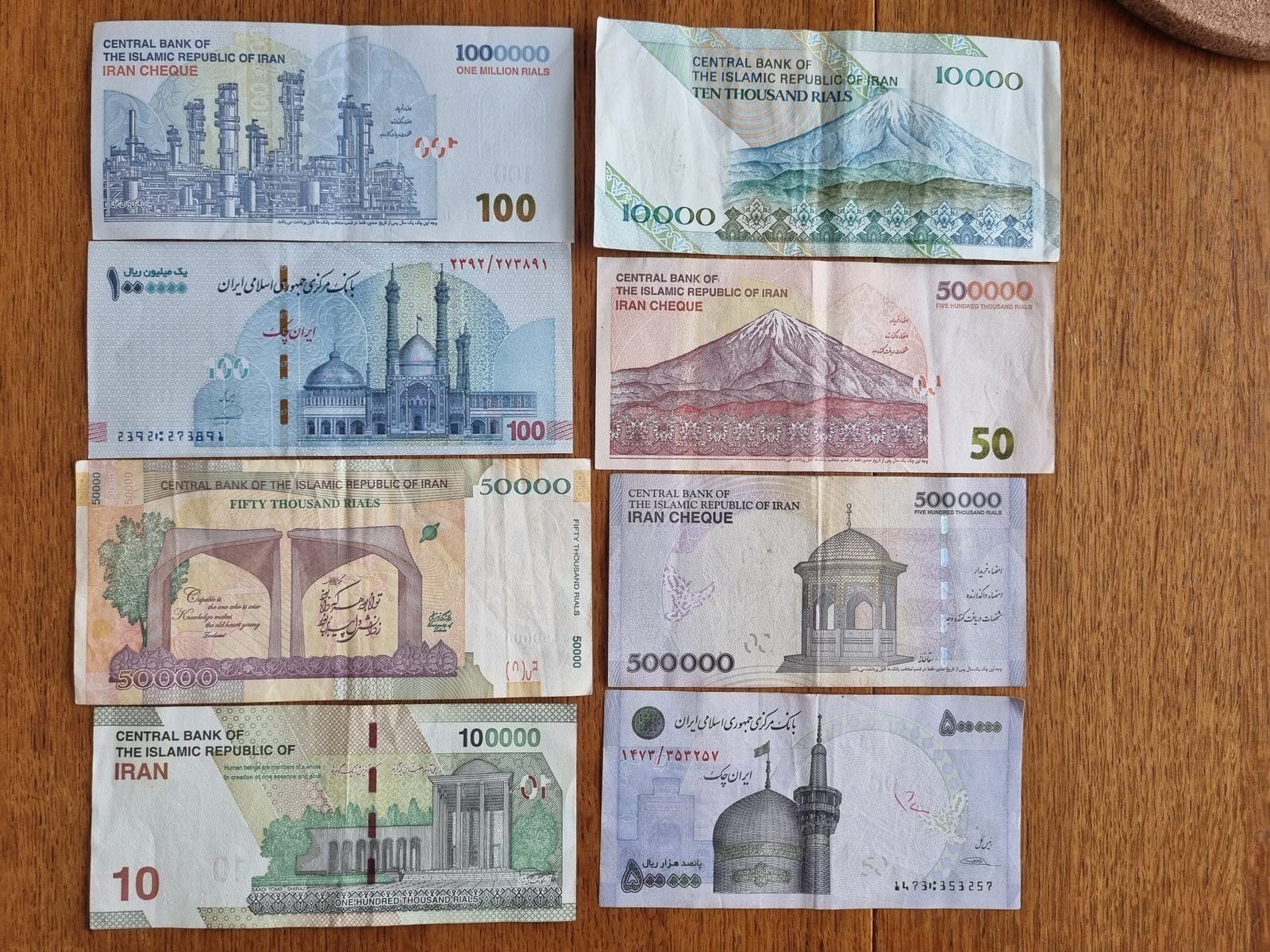
Iran’s currency has reached another historic low. On October 3, 2026, the Iranian rial traded at about 2.688 million to the U.S. dollar in the market, after losing more than half its value over the previous year.
But the story behind Iran’s currency is older than the latest crisis. It involves the rial, the toman, inflation, sanctions and years of economic pressure.
What Is the Currency of Iran?
The official currency of Iran is the Iranian rial, commonly abbreviated IRR. It has been the country’s official monetary unit since 1932, when it replaced the qiran.
The name “toman” creates much of the confusion. Iranians have long used toman in everyday transactions even though the rial remained the official currency. Historically, the relationship was 1 toman to 10 rials in the modern system.
This means a price quoted as 500,000 tomans traditionally represents 5 million rials. Visitors who do not understand the distinction can easily misread prices.
Why Do Iranians Say Toman?
The toman has a much older history. It was used as a major monetary unit before the modern rial system, and the name remained embedded in everyday Iranian language.
In 1932, the rial became the official currency. Yet the toman did not disappear from ordinary speech. Reuters has previously reported that most Iranians continued referring to prices in tomans despite the rial being the official unit.
That creates a peculiar situation. Official documents and exchange-rate announcements may use rials, while shops and consumers can use tomans when discussing the same price.
When Did the Rial Begin Losing Its Strength?
The modern decline of the rial cannot be traced to one event.
After the 1979 Iranian Revolution, the currency experienced major pressure. The exchange rate was around 70 rials to the U.S. dollar in 1979, according to historical currency records. By 1999, one dollar was worth thousands of rials.
The Iran-Iraq War, inflation, capital flight and economic restrictions all contributed to long-term pressure. Over subsequent decades, sanctions increasingly complicated Iran’s ability to conduct international financial transactions.
The result was a widening difference between official exchange rates and rates available in less-regulated markets.
Sanctions and the Currency
Sanctions have played a significant role in the modern history of the rial.
The United States imposed direct sanctions related to Iran’s currency in 2013. The policy targeted significant transactions involving the rial and was designed in part to restrict its international use.
Further U.S. sanctions were reimposed after Washington withdrew from the 2015 nuclear agreement in 2018. The rial suffered another major decline during that period.
The Iran Primer reported that the currency fell sharply following the renewed sanctions, illustrating how access to foreign currency and international financial channels can affect the value of the rial.
Why Has the Rial Fallen So Dramatically in 2026?
The latest decline has occurred during an exceptionally severe period for Iran’s economy.
Reuters reported on October 3 that the rial had fallen to around 2.688 million per U.S. dollar. The report linked the deterioration to severe economic pressures, including U.S. sanctions and a naval blockade. Iran’s inflation rate was reported to be above 70%.
The Central Bank of Iran has attempted to respond by selling foreign currency through state banks. Reuters reported that the bank had begun selling up to $2 billion in U.S. currency to support the rial.
This does not mean the government has permanently fixed the exchange rate. Foreign-exchange markets can react rapidly to expectations about sanctions, oil revenues, political negotiations and access to international banking.
Official Rate Versus the Market Rate
One of the most important details when discussing the Iranian currency is that there is not always one meaningful exchange rate.
The Central Bank of Iran publishes official foreign-exchange rates. For October 4, 2026, the reported official rate was about 1.758 million rials per U.S. dollar.
The market rate reported by Reuters a day earlier was considerably higher at roughly 2.688 million rials per dollar.
The difference demonstrates why simply searching for “Iran currency exchange rate” can produce confusing results. The rate depends on which market or official system is being referenced.
Is Iran Replacing the Rial With the Toman?
Iran has repeatedly discussed currency reform.
In 2020, Iran’s parliament approved plans to remove four zeros from the currency and rename the main unit the toman. Under that proposal, one toman would equal 10,000 existing rials.
Currency redenomination is designed mainly to simplify accounting and everyday transactions. It does not automatically create economic value.
Removing zeros cannot, by itself, solve inflation or restore purchasing power. The underlying economy must also stabilise for a new monetary unit to have lasting credibility.
Claims that a currency reform alone will make the rial—or a future toman—strong against the dollar should therefore be treated cautiously.
What Does the Rial’s Collapse Mean for Ordinary People?
A weaker currency makes imported goods more expensive and reduces the purchasing power of money held in rials.
Reuters reported that Iranians have increasingly looked toward foreign currencies and gold as stores of value during the latest crisis.
That behaviour is not unique to Iran. When people expect their domestic currency to lose value, they may seek assets they believe will preserve purchasing power.
For Iranian households, however, this creates another problem: everyday costs can rise faster than wages. A currency crisis therefore becomes more than a number on an exchange-rate screen.
The Real Story Behind Iran’s Currency
The mystery surrounding Iran’s currency is not really whether the country uses the rial or the toman. The official answer remains the rial, while the toman continues to play an important role in everyday language and pricing.
The deeper issue is purchasing power.
Iran’s currency has experienced decades of depreciation, with sanctions, inflation, economic restrictions and political instability repeatedly adding pressure. The record-low levels reported in 2026 represent the latest chapter rather than an isolated event.
For anyone trying to understand Iran’s money, one fact matters most: the rial is the official currency, the toman is deeply embedded in everyday usage, and the value of both in practical terms depends on the purchasing power of Iran’s monetary system.