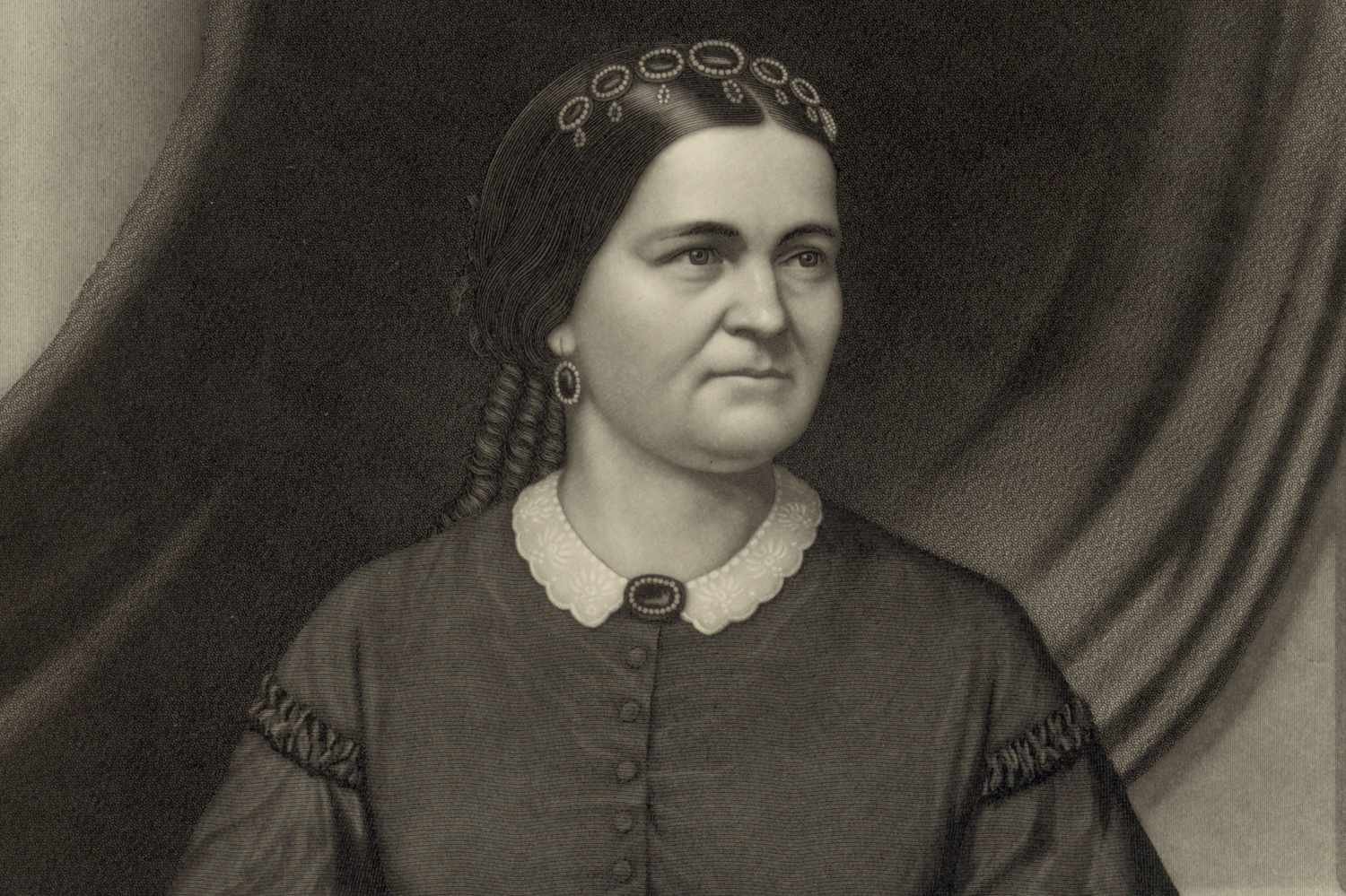
Mary Todd Lincoln remains one of the most discussed women of 19th-century America. Born into a prominent Kentucky family, she later moved to Illinois, where she met Abraham Lincoln. Their marriage brought her into politics, eventually making her First Lady during the Civil War. Her life included public criticism, family tragedy, political pressure, and personal struggles that shaped her lasting place in American history.
Who Was Mary Todd Lincoln?
Mary Todd Lincoln was born on December 13, 1818, in Lexington, Kentucky. She grew up in a wealthy and politically connected family and received a strong education for a young woman of her era.
In 1839, Mary moved to Springfield, Illinois, where she lived with her sister Elizabeth Edwards. There, she became acquainted with Abraham Lincoln, then a young lawyer and politician.
The couple married on November 4, 1842. Their relationship connected Mary’s socially prominent background with Lincoln’s developing political career.
Mary Todd Lincoln and Abraham Lincoln
Mary and Abraham Lincoln came from very different family backgrounds. Mary had grown up in a relatively wealthy Kentucky household, while Abraham had experienced a much more modest upbringing.
Despite their differences, they built a family together and supported each other’s ambitions. Mary understood politics and social relationships well, and she encouraged her husband’s political career as he moved from Illinois politics toward national prominence.
Their marriage produced four sons:
| Son | Birth | Death | Notable Detail |
|---|---|---|---|
| Robert Todd Lincoln | 1843 | 1926 | Only son to reach adulthood |
| Edward Baker Lincoln | 1846 | 1850 | Died as a young child |
| William Wallace Lincoln | 1850 | 1862 | Died during Abraham’s presidency |
| Thomas “Tad” Lincoln | 1853 | 1871 | Youngest son |
The repeated loss of children became one of the defining tragedies of Mary’s life.
Mary Todd Lincoln as First Lady
When Abraham Lincoln became president in 1861, Mary Todd Lincoln moved into the White House with their two youngest sons, Willie and Tad.
Her role as First Lady was unusually difficult because the country was entering the Civil War. She had to manage White House social responsibilities while facing intense public attention.
Mary also became involved in improving the appearance of the White House. She purchased furniture and redecorated several rooms, hoping to create a more impressive presidential residence.
However, her spending attracted criticism during a period when the country was experiencing war and hardship. Newspapers and political critics frequently examined her behavior, clothing, social activities, and expenses.
The Death of Willie Lincoln
One of the most painful events in Mary Todd Lincoln’s life was the death of her son William, known as Willie.
Willie died on February 20, 1862, from typhoid fever while his father was president. He was only eleven years old.
The loss devastated Mary. She struggled deeply with grief while Abraham Lincoln was simultaneously dealing with the enormous pressures of the Civil War.
Mary later became interested in spiritualism, hoping to find comfort and possibly communicate with deceased family members. Her grief influenced many aspects of her later life.
Her Relationship With Elizabeth Keckly
Elizabeth Keckly, a formerly enslaved woman who became a successful dressmaker, worked for Mary Todd Lincoln as her personal seamstress.
Keckly became more than an employee. She developed a close relationship with Mary and was familiar with the family’s private struggles.
Keckly also supported relief efforts for formerly enslaved people who had arrived in Washington during the Civil War. Mary Lincoln contributed to charitable efforts connected with these relief activities.
Their relationship offers an important glimpse into the complicated social world surrounding the Lincoln White House.
Mary Todd Lincoln After Abraham Lincoln’s Assassination
Mary’s life changed dramatically on April 14, 1865, when Abraham Lincoln was assassinated at Ford’s Theatre in Washington, D.C. She had been sitting beside him when he was shot.
Following his death, Mary remained in the White House for several weeks before leaving Washington.
The assassination left her widowed and placed her under even greater public scrutiny. Her grief, financial concerns, and relationship with the public became subjects of continuing controversy.
She later experienced additional hardship after the death of her youngest son, Tad, in 1871.
The 1875 Sanity Trial
One of the most controversial chapters of Mary Todd Lincoln’s life occurred in 1875.
Her surviving son, Robert Todd Lincoln, became concerned about his mother’s behavior and helped initiate legal proceedings that resulted in a jury declaring her insane. She was placed in a private institution for a period.
The case remains historically significant because Mary had little opportunity to defend herself during the initial proceedings.
Eventually, she was able to secure her release with assistance from friends and lawyers. The episode greatly affected how later generations viewed her life and personality.
Mary Todd Lincoln’s Final Years
After leaving institutional care, Mary spent time traveling in Europe, including periods in France. She continued to experience grief and health problems.
Her final years were marked by separation from much of American public life. She eventually returned to the United States and stayed with her sister Elizabeth Edwards in Springfield, Illinois.
Mary Todd Lincoln died on July 16, 1882, at the age of 63. She was buried in Oak Ridge Cemetery in Springfield alongside Abraham Lincoln and their sons.
Why Mary Todd Lincoln Is Still Remembered
Mary Todd Lincoln’s historical importance extends beyond being Abraham Lincoln’s wife. Her experiences provide a window into the complicated role of a First Lady during wartime.
She faced criticism over her spending, intense personal grief, political hostility, and public judgment. At the same time, she participated in charitable efforts and supported her husband’s political career.
Modern historians continue to examine her life from different perspectives. Rather than viewing her only through the controversies surrounding her, researchers have increasingly considered the difficult circumstances in which she lived.
Conclusion
Mary Todd Lincoln lived through some of the most turbulent years in American history. From her Kentucky childhood and marriage to Abraham Lincoln to her years in the White House and painful life as a widow, her story was shaped by both privilege and profound loss.
Her complicated legacy continues to attract interest because it reflects the personal cost of living at the center of American political history.
FAQs About Mary Todd Lincoln
1. Who was Mary Todd Lincoln?
Mary Todd Lincoln was the wife of President Abraham Lincoln and served as First Lady of the United States from 1861 until his assassination in 1865.
2. When was Mary Todd Lincoln born?
Mary Todd Lincoln was born on December 13, 1818, in Lexington, Kentucky.
3. How many children did Mary Todd Lincoln have?
Mary and Abraham Lincoln had four sons: Robert, Edward, William, and Thomas, known as Tad.
4. What happened to Mary Todd Lincoln after Abraham Lincoln died?
After Abraham Lincoln’s assassination, Mary lived as a widow, faced financial and personal difficulties, traveled in Europe, and experienced further family loss.
5. When did Mary Todd Lincoln die?
Mary Todd Lincoln died on July 16, 1882, at her sister’s home in Springfield, Illinois.