Introduction
The phrase Greek helicopter crash has drawn renewed attention following a fatal helicopter accident on the Greek island of Sifnos. Three people died when a private helicopter crashed shortly before landing on August 17, 2026. The incident has prompted an investigation into what went wrong during the final stage of the flight, while authorities and emergency teams worked at the scene.
What Happened in the Greek Helicopter Crash?
The latest Greek helicopter crash occurred on Sifnos, a popular island in the Cyclades.
A private Bell 206 helicopter crashed in the Tholos area of the island while approaching its intended landing location. The aircraft went down in a field and caught fire after the impact.
Greek authorities confirmed that all three people aboard the helicopter died.
The victims were two British newlyweds, Alexander Cromie and Marie Ebert, and their Greek pilot, Giorgos Raikos.
The couple had been traveling in Greece for their honeymoon.
The Final Moments
Initial reports indicate that the helicopter was approaching Sifnos when difficulties developed during the final part of the flight.
Witnesses reportedly heard an unusual noise before the aircraft lost control and descended rapidly.
The exact sequence of events remains under investigation, meaning early explanations should not be treated as a final determination of the cause.
Who Were the Victims?
The tragedy involved three people with different backgrounds.
Alexander Cromie and Marie Ebert were British newlyweds who were on their honeymoon in Greece. Their deaths have led to tributes from people who knew them personally and professionally.
The pilot, Giorgos Raikos, was an experienced Greek pilot and former military officer.
The loss of all three people has made the incident particularly devastating for their families and communities.
| Detail | Information |
|---|---|
| Location | Sifnos, Greece |
| Area | Tholos |
| Date | August 17, 2026 |
| Aircraft | Bell 206 helicopter |
| People aboard | Three |
| Fatalities | Three |
| Flight purpose | Private travel |
| Investigation | Ongoing |
Possible Cause of the Crash
One of the most important questions surrounding the Greek helicopter crash is what caused the aircraft to lose control.
Authorities have not yet established a definitive cause.
Possible Mechanical Problem
Early reports have focused attention on a possible mechanical issue.
Witnesses described hearing an unusual sound shortly before the helicopter crashed. Investigators are expected to examine the aircraft carefully to determine whether an engine, rotor, transmission, or another mechanical component malfunctioned.
However, a suspected mechanical failure is not the same as a confirmed cause.
Other Factors Under Investigation
Aviation investigators generally examine multiple factors after a serious accident.
These can include:
- Aircraft maintenance history
- Mechanical condition
- Weather conditions
- Pilot actions
- Flight path
- Communications
- Air traffic information
- Possible technical warnings
- Operating procedures
Investigators must examine the available evidence before reaching a final conclusion.
Emergency Response on Sifnos
Emergency responders were quickly sent to the crash location.
The impact caused a fire, making the site particularly difficult and dangerous for rescuers. Firefighters and other emergency personnel worked to secure the area and recover the victims.
The remote nature of some island locations can make emergency operations more challenging than similar incidents in major urban areas.
Authorities also secured the crash site so investigators could examine the wreckage and surrounding area.
Why the Crash Has Attracted International Attention
The incident has received attention beyond Greece because two of the victims were British citizens.
The fact that the victims were newly married and traveling on their honeymoon has also made the tragedy especially poignant.
Sifnos is known as a popular tourist destination, and helicopter travel can be an attractive option for visitors who want to reach Greek islands more quickly.
The crash has therefore raised questions about helicopter safety, particularly for private and tourist flights.
Helicopter Travel in Greece
Helicopters play an important role in Greece.
They are used for:
- Tourism
- Emergency medical transportation
- Search and rescue
- Military operations
- Firefighting
- Private transportation
- Island travel
Greece’s geography makes aviation particularly useful. The country has thousands of islands and a large number of remote coastal and mountainous areas.
At the same time, helicopter operations can involve challenges such as changing weather, confined landing areas, mountainous terrain, and demanding flight conditions.
A Recent Pattern of Helicopter Accidents
The Sifnos accident comes after other helicopter incidents in Greece during 2026.
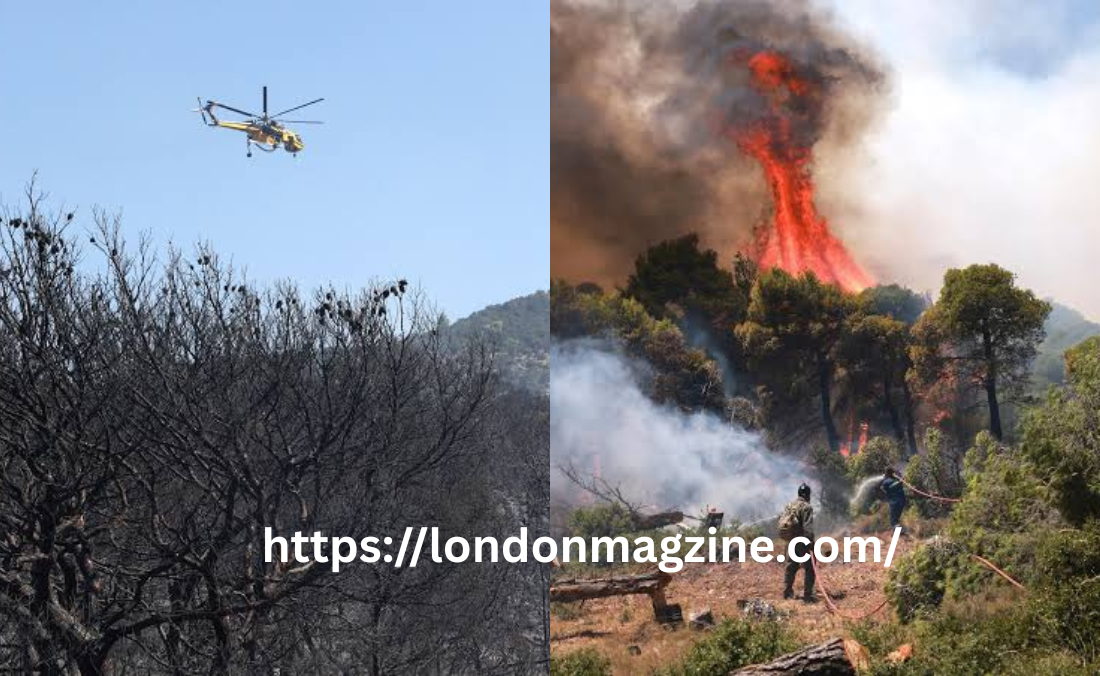
On August 2, two firefighting helicopters collided in mid-air near Psatha, west of Athens, while participating in wildfire operations. Two crew members died, while two others survived.
Earlier, on June 25, a firefighting helicopter went down in the artificial Lake Aoos during a wildfire operation. The two people aboard survived and were rescued.
These incidents are separate from the Sifnos crash and should not automatically be treated as evidence of a wider technical problem. Each accident requires its own investigation.
How Aviation Investigators Examine a Crash
After a serious helicopter accident, investigators normally reconstruct what happened from multiple sources.
Examining the Wreckage
The aircraft remains can provide important clues about mechanical failures, impact damage, fire patterns, and component conditions.
Reviewing Communications
Radio communications can help investigators establish what the pilot reported before the accident.
Studying Flight Information
Investigators may reconstruct the helicopter’s route, altitude, speed, and movements before the crash.
Gathering Witness Accounts
People near the scene can provide valuable information about sounds, aircraft movement, weather, and the moments immediately before the accident.
No single piece of evidence is necessarily enough to explain an accident. Investigators usually combine several findings before reaching a conclusion.
What Happens Next?
The investigation into the Greek helicopter crash is expected to continue as authorities examine the aircraft and circumstances surrounding the accident.
Determining the exact cause can take time. Investigators need to distinguish between confirmed evidence and early observations.
If a mechanical problem is ultimately established, investigators may examine whether it was related to maintenance, component failure, or another technical issue.
If other factors are identified, those findings will be considered as part of the official accident investigation.
Frequently Asked Questions
1. Where did the Greek helicopter crash happen?
The latest fatal crash happened on the Greek island of Sifnos, in the Tholos area.
2. How many people died in the crash?
Three people died. They were British newlyweds Alexander Cromie and Marie Ebert and their Greek pilot, Giorgos Raikos.
3. What type of helicopter was involved?
The aircraft involved was a Bell 206 helicopter.
4. What caused the Greek helicopter crash?
The definitive cause has not yet been established. Investigators are examining possible mechanical problems and other factors that may have contributed to the accident.
5. Were the victims tourists?
Yes. The British couple were reportedly visiting Greece for their honeymoon when the helicopter crashed while approaching Sifnos.
Conclusion
The Greek helicopter crash on Sifnos is a tragic incident that claimed three lives, including a British newlywed couple and their pilot. While early reports have raised the possibility of a mechanical problem, investigators have yet to establish the definitive cause. The continuing investigation will be important in determining exactly what happened during the helicopter’s final moments and whether any safety lessons can be drawn from the tragedy.