Konstantin Lifschitz: Life, Career, Musical Achievements and Legacy
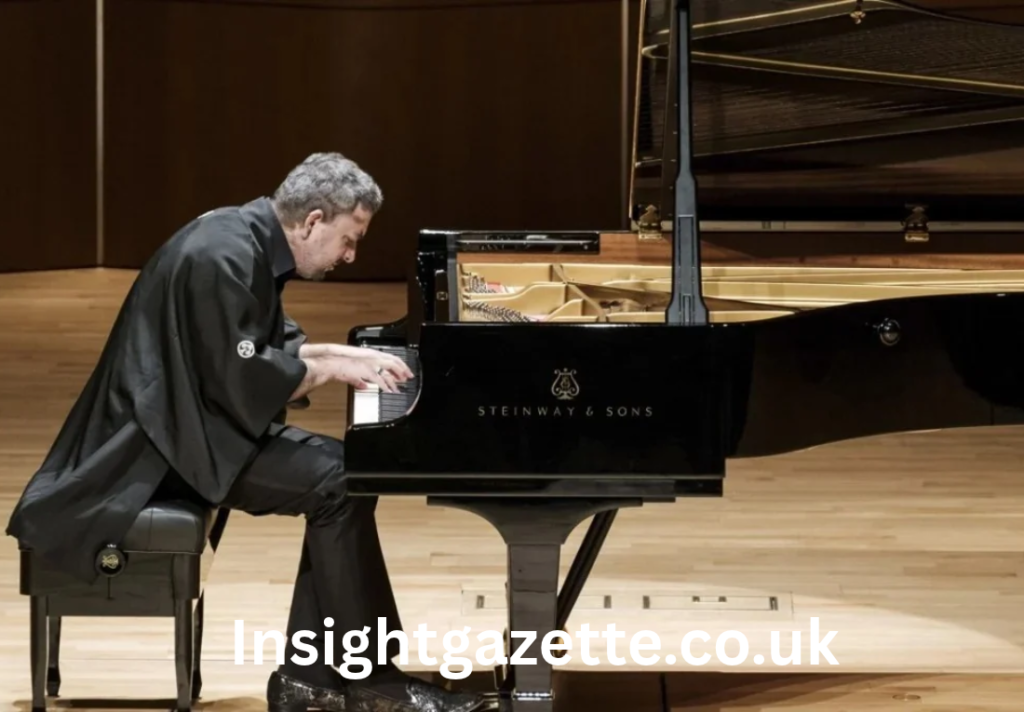
Konstantin Lifschitz is an internationally recognized classical pianist whose performances have attracted attention from music lovers and critics around the world. Known for his thoughtful interpretations, technical ability, and deep understanding of classical compositions, he has developed a respected position in the international music community. His approach to the piano combines musical sensitivity with a strong appreciation for the traditions of classical music.
The story of Konstantin Lifschitz is particularly interesting because it reflects the dedication, discipline, and artistic curiosity required to build a successful career in classical music. From his early musical education to performing on prestigious concert stages, his journey demonstrates how consistent practice and a passion for musical expression can shape an artist’s professional life.
Who Was Konstantin Lifschitz?
Early Life and Birthplace
Konstantin Lifschitz was born in 1976 in Kharkiv, Ukraine, which was then part of the Soviet Union. His interest in music developed at a remarkably young age. When he was just five years old, he began studying piano at the Gnessin Music School in Moscow, an institution known for its strong musical education.
His early development was supported by experienced teachers who helped him build the technical foundation needed for a professional career. One of the most influential figures in his musical education was Tatiana Zelikman. Her guidance played an important role in shaping his understanding of piano performance and classical interpretation.
Unlike many musicians who discover their interests during their teenage years, Lifschitz started developing his artistic abilities during childhood. His early commitment to music eventually opened opportunities to perform before international audiences.
Musical Education and Influential Teachers
Lifschitz received an extensive musical education that went beyond his early training in Moscow. After graduating, he continued his studies in the United Kingdom and Italy, where he had opportunities to learn from several respected musicians and educators.
His teachers included Alfred Brendel, Leon Fleisher, Charles Rosen, Rosalyn Tureck, Fou Ts’ong, Hamish Milne, and Karl-Ulrich Schnabel. Learning from such distinguished musicians gave him exposure to different approaches to classical performance.
These educational experiences helped him develop a broad musical perspective. Rather than concentrating exclusively on technical accuracy, he became interested in understanding the historical background, structure, and emotional meaning of the compositions he performed.
His education also encouraged him to explore different composers and musical periods. This knowledge later became an important part of his identity as a concert pianist.
Konstantin Lifschitz’s Rise to International Recognition
His First Major Performances
One of the most remarkable aspects of Konstantin Lifschitz’s career was how early he entered the professional music world. At just 13 years old, he performed a major recital at the October Hall of the House of Unions in Moscow.
The performance attracted considerable attention and established him as a promising young pianist. It demonstrated that he possessed not only impressive technical abilities but also the confidence required to perform demanding classical compositions before large audiences.
During the early 1990s, his career began expanding beyond Russia. He performed in important European cities, including Paris, Amsterdam, Vienna, Munich, and Milan.
These appearances helped introduce his musical abilities to international audiences and created opportunities to work with established orchestras and conductors.
Recognition Through the ECHO Klassik Award
A significant milestone arrived in 1995 when Lifschitz received the ECHO Klassik Award in the emerging artist category for his first recording.
The recognition was important because it introduced his work to a wider classical music audience. It also confirmed that his early performances and recordings had attracted attention within the professional music industry.
In 1996, his recording of Johann Sebastian Bach’s Goldberg Variations received a Grammy nomination. This achievement further strengthened his international reputation.
These early accomplishments established a foundation for a career that would continue across several decades.
His Musical Style and Approach to Classical Music
A Strong Connection With Bach
Johann Sebastian Bach occupied an especially important position in Lifschitz’s musical career. His performances of Bach’s keyboard compositions became some of the most recognizable parts of his artistic work.
Bach’s music requires a combination of technical precision, concentration, and an understanding of complex musical structures. Lifschitz approached these compositions with considerable attention to detail.
His work on the Goldberg Variations and The Art of Fugue demonstrated his interest in exploring the depth of Bach’s music. Rather than treating these compositions simply as technical challenges, he approached them as works requiring careful interpretation and artistic imagination.
His dedication to Bach also extended to larger musical projects. He performed extensive collections of the composer’s keyboard works and recorded several important compositions.
His Interpretations of Beethoven
Although Bach was central to his career, Lifschitz also developed a strong connection with the music of Ludwig van Beethoven.
One of his notable projects was recording Beethoven’s complete 32 piano sonatas. Released in 2020 through Alpha Classics, the collection represented a major achievement in his recording career.
The sonatas are among the most important works in the classical piano repertoire. Performing the complete collection requires considerable musical understanding, stamina, and the ability to communicate different emotional characters.
His recording project demonstrated his commitment to studying major classical works in their entirety rather than concentrating only on individual popular compositions.
International Performances and Collaborations
Working With Leading Orchestras
Throughout his career, Konstantin Lifschitz performed with several internationally recognized orchestras. These included the New York Philharmonic, Chicago Symphony Orchestra, London Symphony Orchestra, and San Francisco Symphony.
His collaborations extended across Europe, Asia, and other international music markets.
Working with different orchestras required flexibility and an understanding of how solo piano performances interact with larger musical ensembles. Lifschitz developed experience in both solo concert performances and orchestral programs.
He also worked with respected conductors, including Mstislav Rostropovich, Vladimir Spivakov, Bernard Haitink, Sir Neville Marriner, and Yuri Temirkanov.
Such collaborations contributed significantly to his professional reputation.
Chamber Music Collaborations
Chamber music was another important part of Lifschitz’s artistic life. Unlike solo performances, chamber music requires musicians to work closely together and maintain a shared understanding of timing, expression, and interpretation.
He collaborated with internationally respected musicians, including Gidon Kremer, Maxim Vengerov, Mischa Maisky, Patricia Kopatchinskaja, and Sol Gabetta.
These collaborations allowed him to explore classical compositions from different perspectives.
His chamber music work also demonstrated that his artistic interests extended beyond individual piano performances. He valued musical communication and the creative exchange that takes place between accomplished performers.
Konstantin Lifschitz as a Conductor
Although he became internationally recognized as a pianist, Lifschitz also developed an interest in conducting.
This additional responsibility allowed him to explore orchestral music from a different perspective. Conducting requires an understanding of the entire musical arrangement, including the relationship between individual instruments and the overall structure of a composition.
He worked with ensembles such as the Moscow Virtuosi, Century Orchestra Osaka, and Stuttgart Chamber Orchestra.
One particularly interesting aspect of his conducting career was his ability to perform and lead musical ensembles from the piano.
He also founded the Lucerne Chamber Philharmonic and served as its artistic director. The orchestra reflected his interest in developing musical projects that combined performance, collaboration, and artistic leadership.
His work as a conductor demonstrated his versatility and willingness to explore different responsibilities within classical music.
Recordings and Major Musical Projects
Important Classical Recordings
Recording was an essential part of Lifschitz’s professional career. His discography included works by Bach, Beethoven, Brahms, Mozart, Ravel, Debussy, and other important composers.
His 2015 recording of Bach’s Goldberg Variations was another notable contribution to his interpretation of the composer’s music.
In 2016, he released Saisons Russes, featuring compositions associated with Ravel, Debussy, Stravinsky, and Jakoulov.
His 2020 Beethoven collection was particularly ambitious because it brought together all 32 piano sonatas in a complete recording project.
In 2022, he released a recording featuring music by Johann Sebastian Bach and Peter Seabourne, continuing his interest in connecting established classical compositions with contemporary musical creativity.
Why His Recordings Remain Important
Classical recordings allow performances to reach people who may never have the opportunity to attend a live concert.
For Lifschitz, recording provided another way to communicate his musical interpretations. His albums documented different stages of his artistic development and preserved performances of important compositions.
His extensive recording catalogue also demonstrated his willingness to explore challenging repertoire throughout his career.
Teaching Career and Contribution to Music Education
His Work at Lucerne University
Beyond performing and recording, Konstantin Lifschitz made a lasting contribution to music education.
In 2008, he began teaching his own piano class at Lucerne University of Applied Sciences and Arts in Switzerland. He continued working with students there until the final period of his life.
He was also a Fellow of the Royal Academy of Music in London, reflecting the recognition he received within the international musical community.
His teaching focused on developing musicians who could understand classical compositions beyond their technical requirements.
For aspiring pianists, learning from an experienced performer can provide valuable insight into musical interpretation, preparation, and professional discipline.
Lifschitz’s academic work allowed him to share the knowledge gained through decades of international performances.
His Influence on Young Pianists
Teaching was an important extension of his artistic career. His students had the opportunity to learn from someone who had performed with leading orchestras and appeared in major concert venues.
His experience demonstrated that becoming a successful classical musician requires more than natural talent. Consistent practice, patience, intellectual curiosity, and an understanding of musical traditions are equally important.
The Lucerne University community later recognized his contribution to its musical environment and the influence he had on generations of students.
Konstantin Lifschitz’s Death and Legacy
When Did Konstantin Lifschitz Die?
Konstantin Lifschitz died on November 26, 2026, at the age of 49, following a prolonged illness. His death was confirmed by his management on November 27, 2026, according to a report by BR-KLASSIK.
Reports also stated that he had been battling melanoma.
His death was a significant loss for the international classical music community, particularly for musicians, students, colleagues, and listeners who appreciated his interpretations of Bach and Beethoven.
The news also brought renewed attention to his contributions as a performer, conductor, recording artist, and educator.
How Will His Musical Work Be Remembered?
Lifschitz leaves behind an extensive musical catalogue and a career built around serious engagement with classical repertoire.
His recordings of Bach’s Goldberg Variations, The Art of Fugue, and Beethoven’s complete piano sonatas remain important examples of his artistic interests.
His work with international orchestras and chamber musicians also forms a significant part of his professional legacy.
Perhaps equally important is the influence he had on music students at Lucerne University. His teaching helped pass musical knowledge and performance experience to younger generations.
His career demonstrated that artistic success does not depend exclusively on awards or public recognition. Long-term dedication to music, meaningful collaborations, and a commitment to education can create an influence that extends beyond the concert stage.
Conclusion
Konstantin Lifschitz built an extraordinary career through dedication to classical music, international performances, and a deep understanding of important composers. From beginning piano lessons at five to performing with leading orchestras, his journey reflected decades of artistic commitment.
His interpretations of Bach and Beethoven, extensive recording projects, conducting experience, and contribution to music education established him as a respected figure in classical music.
Although his death in November 2026 brought his life and professional journey to an end, his recordings and educational contributions remain part of his legacy. For classical music enthusiasts, Konstantin Lifschitz will be remembered as a gifted pianist whose work demonstrated the lasting power of musical expression.